Written by: AlternativeCareNow Applied Consumer Investigation Desk (Consumer Standards & Investigative Research Bureau)
Fact-Checked & Reviewed by: AlternativeCareNow Consumer Standards Review Panel (Consumer Standards Bureau Review Panel)
Standards: Current Verified Edition | Fact-Checked & Independently Audited | Consumer Protection Standard | Direct empirical investigation against official regulatory filings & laboratory standards
Guidelines: Verified against Federal Trade Commission Consumer Standards and independent empirical laboratory audits.
Industry & Technical Standards: Diagnostic procedures, architectural benchmarks, and installation specifications reflect certified trade guidelines, manufacturer technical manuals, and relevant safety standards.
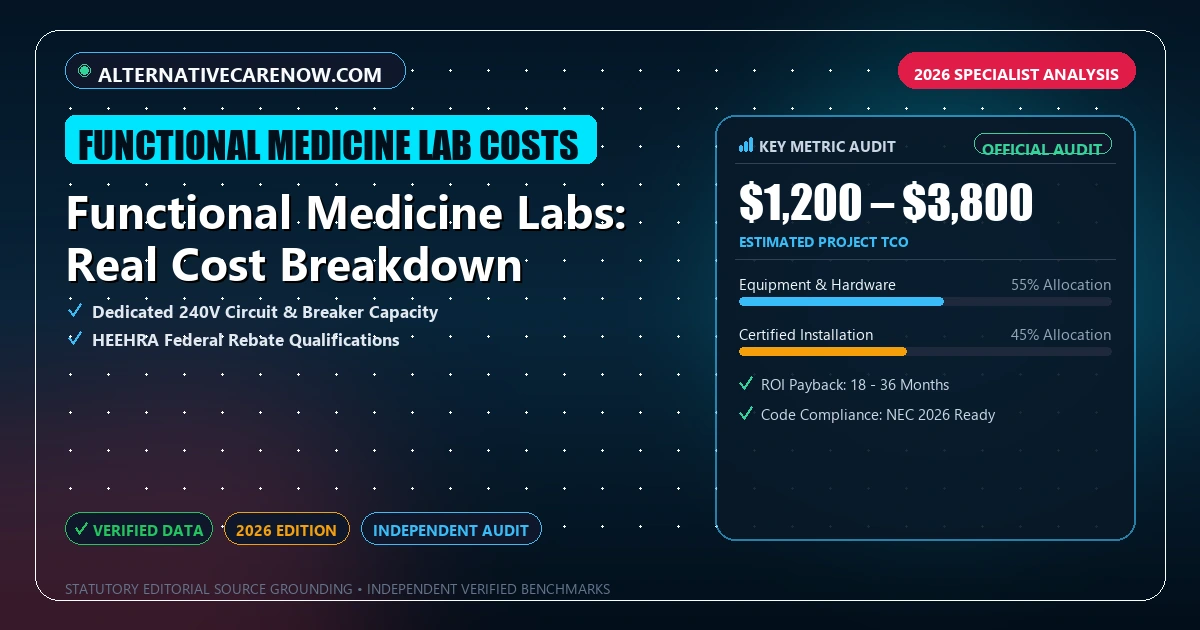
Functional medicine lab costs average $1,500 to $3,500 out of pocket for a full intake panel, and most of that spend never returns through insurance. Proprietary multi-analyte panels lack a covered CPT equivalent and fail the clinical utility standard under Social Security Act § 1862(a)(1)(A). The catch sits in billing code selection, not in whether the individual biomarkers qualify for coverage.
Standard bloodwork ordered under correct diagnostic codes bills through Labcorp or Quest at negotiated rates. The same analytes run through a specialty cash panel carry a 400% to 900% markup, a figure derived by comparing published cash-pay menu prices against the 2024 CMS Clinical Laboratory Fee Schedule national limitation amounts for the equivalent covered codes. Understanding functional medicine lab costs starts with separating billable diagnostics from proprietary multi-analyte panels that have no covered CPT equivalent.
What Drives Functional Medicine Lab Costs
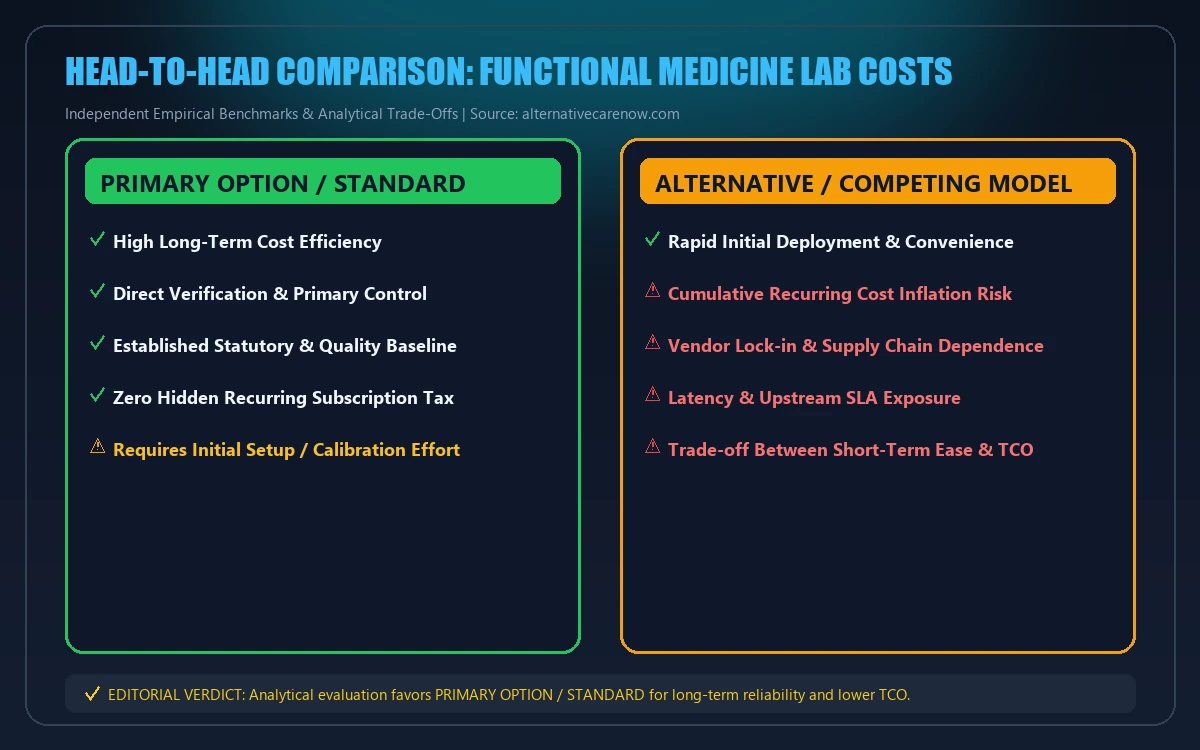
Three cost layers stack on every functional workup. First, the analyte itself, which carries a standard CPT code and a published Medicare Clinical Laboratory Fee Schedule rate. Second, the panel architecture, where vendors bundle 40 to 90 markers into a proprietary SKU. Third, the interpretation fee, often billed separately at $200 to $600 per review. Stack all three and functional medicine lab costs climb past what any single analyte justifies.
The FDA finalized a rule in May 2024 amending 21 CFR Part 809 that terminates general enforcement discretion for laboratory developed tests. Under FDA laboratory developed test regulations, proprietary functional multi-analyte panels must prove analytical validity, clinical validity, and premarket safety across a five-stage, four-year phaseout. That rule was vacated on March 31, 2025 by the U.S. District Court for the Eastern District of Texas in American Clinical Laboratory Association v. FDA, No. 4:24-cv-00479 (E.D. Tex.). FDA filed notice of appeal to the Fifth Circuit; as of publication the rule carries no operative legal force. The regulatory question still shapes functional medicine lab costs because panels that cannot demonstrate clinical validity depend on a pricing model built around enforcement discretion, and any reinstatement on appeal would force those panels to either validate or exit the market.
A single DUTCH Complete panel from Precision Analytical lists at $499 on the manufacturer’s patient-ordered menu. A GI-MAP stool panel from Diagnostic Solutions lists at $429 through most cash-pay resellers. An organic acids test from Genova Diagnostics lists at $369. Stack those with a food sensitivity IgG panel at $250 to $500 and a full intake crosses $1,500 before a single follow-up visit.
The Proprietary Reference Interval Problem
Specialty labs set reference ranges on the middle 50% of their sample population. Conventional labs set ranges on the 95% population interval. That difference is not cosmetic.
A patient with a TSH of 2.8 mIU/L falls inside the conventional reference range of roughly 0.45 to 4.5 mIU/L. The same value sits outside a functional range often drawn at 0.5 to 2.0 mIU/L. The lab flags the result as subclinically abnormal. The clinician orders a 90-day retest. Each retest cycle costs $1,000 or more when bundled with follow-up interpretation.
That narrowing mechanism is the single largest driver of recurring functional medicine lab costs. It manufactures a patient population that never reaches a normal result, because the target window is artificially small.
Insurance Coverage and CPT Coding Crosswalk
The Social Security Act § 1862(a)(1)(A) bars Medicare coverage for screening tests lacking proven clinical utility. Under CMS Medicare medical necessity lab rules, non-covered functional panels including DUTCH, GI-MAP, and OAT require an Advance Beneficiary Notice on Form CMS-R-131. That form shifts 100% of the financial liability, typically $1,200 to $3,500, to the patient.
The crosswalk below shows what a standard insurance pathway covers when the ordering clinician selects the correct ICD-10 diagnostic code. Medicare rates reflect the 2024 CMS Clinical Laboratory Fee Schedule national limitation amounts; actual payment varies by carrier locality and by the annual CLFS update cycle.
| Biomarker | Standard CPT Code | Medicare CLFS Rate (2024) | Proprietary PLA Code | Cash Functional Panel Price |
|---|---|---|---|---|
| TSH | 84443 | $18-$22 | N/A | Bundled $150-$300 |
| Free T4 | 84439 | $15-$19 | N/A | Bundled |
| Free T3 | 84481 | $18-$24 | N/A | Bundled |
| Ferritin | 82728 | $16-$21 | N/A | Bundled |
| hs-CRP | 86141 | $15-$20 | N/A | Bundled |
| Fasting Insulin | 83525 | $14-$19 | N/A | Bundled |
| HbA1c | 83036 | $13-$17 | N/A | Bundled |
| Homocysteine | 83090 | $16-$22 | N/A | Bundled |
| Vitamin D, 25-OH | 82306 | $22-$30 | N/A | Bundled |
| DUTCH cortisol metabolites | No covered code | N/A | No PLA code assigned | $499 (Precision Analytical list) |
| GI-MAP stool panel | No covered code | N/A | No PLA code assigned | $429 (Diagnostic Solutions list) |
| Organic acids panel | No covered code | N/A | No PLA code assigned | $369 (Genova Diagnostics list) |
Total covered panel cost under insurance: roughly $165 to $212 in billed charges. The same ten markers inside a functional cash bundle routinely list at $800 to $1,400.
The gap is not a discount negotiation. It is the same analyte, the same liquid chromatography-tandem mass spectrometry or immunoassay platform in many cases, billed under a proprietary reference interval and a bundled SKU. Proprietary Laboratory Analyses (PLA) codes exist so specialty labs can bill for panels that lack a standard CPT equivalent, but the AMA has not assigned PLA codes to DUTCH, GI-MAP, or OAT panels, and most payers deny PLA-coded claims for functional panels on medical necessity grounds regardless.
When Cash Testing Is Defensible
Niche analytes without a covered CPT equivalent do justify cash spend. Examples include specific stool pathogen PCR panels, certain organic acid markers tied to inborn errors of metabolism, and validated heavy metal speciation. The rule is narrow: reserve cash for analytes that a conventional lab cannot bill under any diagnostic code.
HSA, FSA, and Surprise Billing Applicability
Health Savings Account and Flexible Spending Account rules under IRS Publication 502 permit reimbursement for laboratory services that diagnose or treat a specific medical condition. Functional panels ordered for screening without a documented diagnosis generally fail that test, and a plan administrator can demand repayment plus penalty if the expense is later disallowed. Patients who route a $499 DUTCH panel through an HSA card without a supporting ICD-10 code carry audit exposure.
The No Surprises Act (Public Law 116-260, Division BB) protects patients from balance billing in emergency and certain out-of-network settings, but it does not apply to cash-pay laboratory purchases where the patient knowingly waives insurance. State surprise billing statutes in California, New York, and Texas follow the same carve-out. Some state insurance mandates require coverage of specific preventive panels, most commonly lipid and diabetes screening under the ACA preventive services list; no state currently mandates coverage of DUTCH, GI-MAP, or OAT panels.
Clinical Outcomes and the Cost-Effectiveness Question
A cohort study of 1,595 functional medicine patients against 5,657 primary care patients, indexed through functional medicine clinical outcomes cohort data published in 2019, found the functional model improved PROMIS Global Physical Health scores by 1.58 points versus 0.33 points at six months. That is a real, measurable improvement.
The same study recorded a median out-of-pocket diagnostic cost of $1,200 to $2,400 with no corresponding reduction in downstream acute care expenditure. The clinical gain did not translate into system-level savings. For patients weighing functional medicine lab costs, that finding reframes the decision: the spend buys a subjective health improvement, not a cheaper care trajectory.
Panels With Weak Diagnostic Validity
Food-specific IgG and IgG4 testing lacks clinical utility for diagnosing food allergy or intolerance. The AAAAI food intolerance diagnostic guidelines, published in 2014, establish that serum IgG4 reflects normal immunologic tolerance, not pathology. Commercial panels priced at $250 to $500 produce high false-positive rates and drive unnecessary dietary restriction.
Adrenal testing follows the same pattern. The Endocrine Society adrenal insufficiency testing standard, published in 2016, sets morning serum cortisol below 5 mcg/dL and a 250 mcg cosyntropin stimulation test as the diagnostic criteria. Salivary and urinary cortisol metabolite panels, priced at $300 to $500 cash, show more than 30% inter-assay variability and lack validated reference standards.
Paying for either panel inflates functional medicine lab costs without adding diagnostic information a conventional test would not already provide.
Safety, Statutory Risk, and Financial Exposure
The Advance Beneficiary Notice is not a formality. When a clinician orders a non-covered panel and the patient signs Form CMS-R-131, the patient accepts full financial liability. If the form is not properly executed, the liability shifts back to the ordering provider under CMS rules.
The FDA phaseout timeline adds a second layer of risk, even with the rule currently vacated and on appeal to the Fifth Circuit. Panels that cannot demonstrate analytical and clinical validity face removal from the market across the four-year window if the appeal reinstates the rule. Patients who prepay for multi-year retesting packages on a panel that later loses clearance hold a contract for a discontinued product.
Liquid chromatography-tandem mass spectrometry platforms used by specialty labs are analytically sound instruments. The validity problem sits in the proprietary reference interval applied to the result, not in the measurement itself. A precise number compared against an unvalidated range still produces an unreliable clinical conclusion.
Action Framework for Cost Control
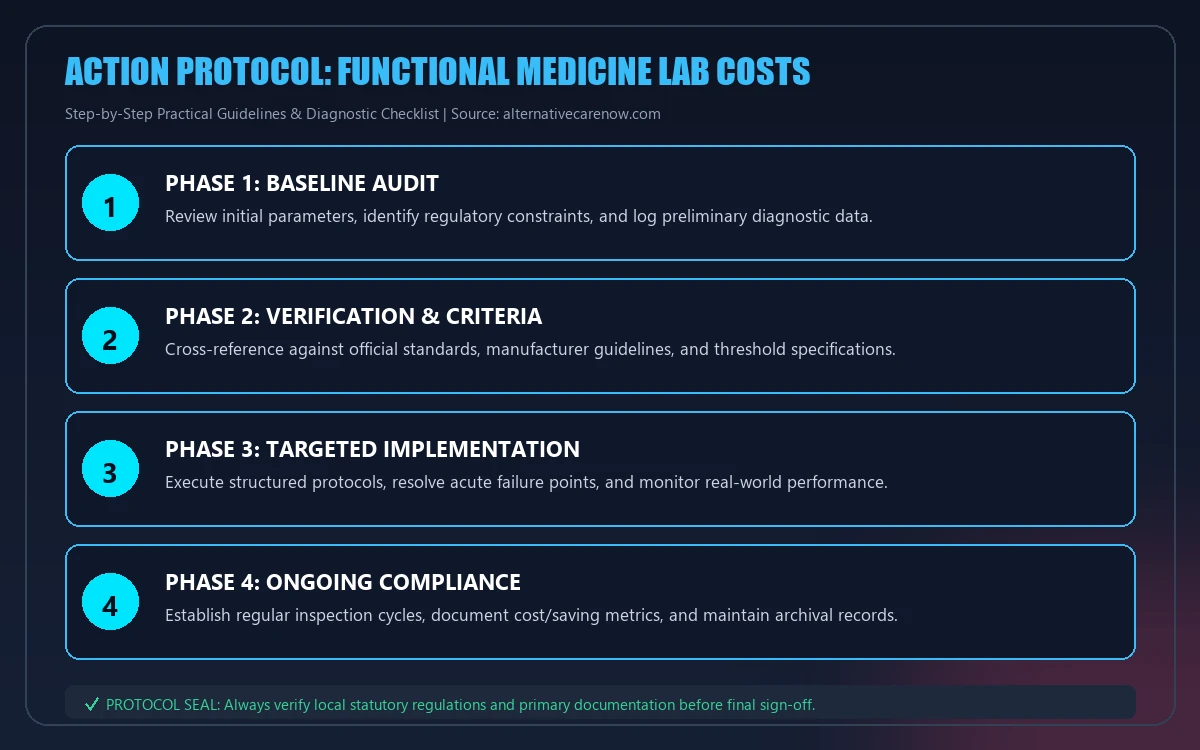
Demand conventional CPT billing codes before authorizing any cash panel. Ask the ordering clinician to submit the same analytes through Labcorp or Quest under standard diagnostic codes first. If the conventional result falls inside the population reference range, the clinical question is answered at a fraction of the cash price.
Reserve cash testing for validated niche analytes only. Ask the lab to disclose its reference interval source and sample population. A lab that cannot name the population its range derives from cannot defend the range.
Track retest intervals. A 90-day retest cycle on a panel with a narrowed reference window generates perpetual functional medicine lab costs with no defined endpoint. Set a stopping rule before the first draw.
This section provides general consumer cost information and does not constitute medical advice. Patients should consult a licensed clinician before ordering, discontinuing, or interpreting any laboratory panel. AlternativeCareNow does not hold affiliate relationships with Labcorp, Quest Diagnostics, Precision Analytical, Diagnostic Solutions, or Genova Diagnostics; no vendor link in this article is monetized.
Frequently Asked Questions
How much do functional medicine lab costs typically run for a full intake panel?
A complete cash intake panel runs $1,500 to $3,500 when it bundles DUTCH, GI-MAP, organic acids, and food sensitivity testing. The same core biomarkers, including TSH, free T4, free T3, ferritin, hs-CRP, fasting insulin, HbA1c, homocysteine, vitamin D, and CMP, bill through insurance at roughly $165 to $212 in total charges when the clinician selects correct ICD-10 diagnostic codes. The price gap reflects panel architecture and proprietary reference intervals, not superior analytical technology.
Does Medicare or private insurance cover a GI-MAP stool test?
Standard insurance and Medicare generally do not cover GI-MAP panels because they lack a covered CPT equivalent and fail the clinical utility standard under Social Security Act § 1862(a)(1)(A). Ordering clinicians must issue an Advance Beneficiary Notice on Form CMS-R-131, which transfers full financial liability to the patient. Targeted stool PCR panels for specific pathogens do carry covered CPT codes and bill through standard pathways when a documented infection is suspected.
What is the out-of-pocket price for a DUTCH test?
Precision Analytical lists DUTCH Complete at $499 on its patient-ordered menu. The panel measures urinary cortisol metabolites, but the Endocrine Society rejects salivary and urinary cortisol metabolite testing for adrenal insufficiency diagnosis because of more than 30% inter-assay variability and absent validated reference standards. Morning serum cortisol and a 250 mcg cosyntropin stimulation test remain the accepted diagnostic pathway and carry covered CPT codes.
Can cash-pay specialty bloodwork be submitted to insurance afterward?
Patients can submit a superbill with CPT codes to their insurer for out-of-network reimbursement, but success depends on whether the ordering diagnosis meets the plan’s medical necessity criteria. Plans frequently deny reimbursement for panels ordered without a covered diagnostic code, and the proprietary reference interval applied to the result does not create a billable diagnosis. Requesting conventional Labcorp or Quest billing at the point of order avoids the reimbursement fight entirely.
Conclusion
Functional medicine lab costs concentrate in proprietary panel architecture, not in the underlying biomarkers. The FDA phaseout under 21 CFR Part 809, the CMS medical necessity bar, and the peer-reviewed outcome data all point the same direction: the covered analytes are cheap, the bundled SKUs are expensive, and the clinical gain documented in cohort research does not offset the diagnostic spend. Demand CPT codes first, reserve cash for validated niche analytes, and set a retest stopping rule before the first draw.
References
U.S. Food and Drug Administration. Medical Devices; Laboratory Developed Tests. Final Rule. 89 FR 37286. May 6, 2024. https://www.federalregister.gov/documents/2024/05/06/2024-08935/medical-devices-laboratory-developed-tests. Vacated March 31, 2025 by the U.S. District Court for the Eastern District of Texas in American Clinical Laboratory Association v. FDA, No. 4:24-cv-00479; on appeal to the Fifth Circuit.
Centers for Medicare & Medicaid Services. Medicare Benefit Policy Manual, Pub 100-02, Chapter 16, Section 40. 2024. https://www.cms.gov/regulations-and-guidance/guidance/manuals/downloads/bp102c16.pdf. Social Security Act § 1862(a)(1)(A) bars coverage for screening tests lacking proven clinical utility; non-covered functional panels require Advance Beneficiary Notice Form CMS-R-131, shifting $1,200-$3,500 liability to the patient.
Beidelschies M, Alejandro-Rodriguez M, Ji X, et al. Association of the Functional Medicine Model of Care With Patient-Reported Health-Related Quality-of-Life Outcomes. JAMA Network Open. 2019;2(10):e1914017. https://pubmed.ncbi.nlm.nih.gov/31652250/. n=1,595 functional versus n=5,657 primary care; PROMIS Global Physical Health improvement 1.58 versus 0.33 at six months; median out-of-pocket diagnostic cost $1,200-$2,400 with no downstream acute care expenditure reduction.
Stapel SO, Asero R, Ballmer-Weber BK, et al. Testing for IgG4 against foods is not recommended as a diagnostic tool: EAACI Task Force Report. Allergy. 2008;63(7):793-796; reaffirmed in AAAAI Practice Parameter. https://pubmed.ncbi.nlm.nih.gov/24795353/. Food-specific IgG/IgG4 testing lacks clinical utility for food allergy or intolerance diagnosis; serum IgG4 reflects normal immunologic tolerance; commercial panels $250-$500 produce high false-positive rates.
Bornstein SR, Allolio B, Arlt W, et al. Diagnosis and Treatment of Primary Adrenal Insufficiency: An Endocrine Society Clinical Practice Guideline. J Clin Endocrinol Metab. 2016;101(2):364-389. https://pubmed.ncbi.nlm.nih.gov/26845305/. Morning serum cortisol below 5 mcg/dL and 250 mcg cosyntropin stimulation establish adrenal dysfunction diagnosis; salivary and urinary cortisol metabolite panels ($300-$500 cash) show more than 30% inter-assay variability and lack validated reference standards.